If there is one place in Darjeeling that every nature lover, wildlife enthusiast, and family should visit, it is the Padmaja Naidu Himalayan Zoological Park, popularly known as the Darjeeling Zoo. Unlike conventional zoos, this high-altitude conservation park is dedicated almost entirely to the unique wildlife of the Himalayas, making it one of the finest zoological parks in India.
Mistakes we did… you shouldn’t repeat
We had carefully planned our Darjeeling itinerary and scheduled our visit to the zoo for the day after our arrival. However, after checking into our homestay, we discovered that the next day was the zoo’s weekly holiday. With no other option, we quickly freshened up and rushed to the zoo that very afternoon. Unfortunately, we reached barely an hour before closing time, leaving us with limited time to explore the zoo, while we missed the Himalayan Mountaineering Institute (HMI) as it was already closed when we reached HMI gate.
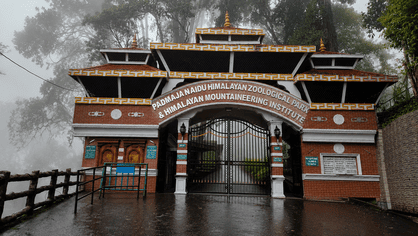
I must say, watching the playful Red Pandas and exploring the beautiful Himalayan wildlife made it one of the most memorable experiences of our trip; even so, we left feeling that our visit was only partially complete!
The experience taught us an important lesson: a little advance planning can make a big difference. Because we were unaware of the weekly closing schedule and timings of the zoo, we couldn’t explore the entire complex at a relaxed pace and missed HMI.
That’s exactly why I’ve created this detailed guide. It covers everything you need to know—from timings, ticket prices, and weekly holidays to the major attractions and practical travel tips—so you can plan your visit better and enjoy both the Darjeeling Zoo and HMI without making the same mistake we did.
Table of Contents
More Than Just a Zoo
Established in 1958, the zoo was created specifically for the conservation and breeding of endangered Himalayan wildlife. Located at an altitude of around 7,000 feet, it is India’s largest high-altitude zoological park and is internationally recognized for its successful captive breeding programmes for species such as the Red Panda, Snow Leopard, and Himalayan Wolf.
Unlike city zoos, the enclosures are designed with natural rocky terrain, dense vegetation, and sloping pathways, giving visitors a feeling of walking through a Himalayan forest.
Watching the Playful Red Pandas
The absolute highlight of Darjeeling zoo is the “Dancing” Red Panda. These tree-dwelling, crimson-furred creatures are notoriously shy, but the cool weather and a steady mountain drizzle often bring out their active side.
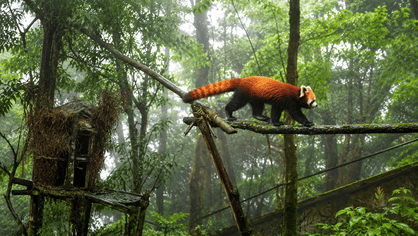
It had been raining continuously, and we stood there holding a couple of umbrellas while watching these adorable Himalayan creatures quietly climbing branches, some were resting on tree trunks, and one of the youngest ones was playfully climbing from branch to branch across the lush green enclosure.
The misty atmosphere, cool mountain breeze, dense greenery, and of course the drizzling weather perfectly recreated the natural habitat of these endangered animals.
No photograph can truly capture the joy of watching a Red Panda in such a peaceful setting, the short video below offers a glimpse of these adorable creatures in their natural surroundings.
If you visit Darjeeling Zoo, don’t rush through this enclosure. Spend a few extra minutes—you’ll probably leave with the same smile that we did.
Explore the Himalayan Fauna at Darjeeling Zoo
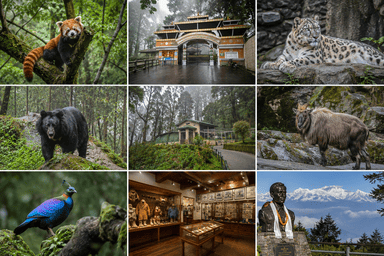
Moving past the pandas, the winding, paved trails of the zoo reveal a spectacular array of specialized alpine wildlife. The property is deeply committed to providing naturalistic habitats for its residents:
- The Ghost of the Mountains: The Snow Leopard enclosure is a masterpiece of rocky terracing, mimicking the high cliffs of the inner Himalayas.
- The Predators: Sleek Siberian Tigers and majestic Royal Bengal Tigers pacing their spacious, forested domains.
- The High-Altitude Herbivores: Rare Himalayan Gorals (mountain goats) and massive, shaggy Himalayan Yaks looking entirely unbothered by the chilly mountain weather.
- The Aviary: A beautifully structured sanctuary filled with regional birds, including the brilliantly colored Himalayan Monal, pheasants, and various vibrant Macaws.
List of some of the major attractions include:
- Red Panda
- Snow Leopard
- Himalayan Wolf
- Tibetan Wolf
- Himalayan Black Bear
- Siberian Tiger
- Royal Bengal Tiger
- Himalayan Tahr
- Blue Sheep (Bharal)
- Himalayan Goral
- Himalayan Monal
- Kalij/ Cheer Pheasant
- Yak
Most of these species are either endangered or rarely seen in other Indian zoos, making Darjeeling Zoo a paradise for wildlife photographers and conservation enthusiasts.
The Himalayan Mountaineering Institute (HMI)
Sharing the exact same complex grounds is the historic Himalayan Mountaineering Institute (HMI). Your entry ticket automatically includes admission to both attractions, making it incredibly convenient to transition from natural wildlife to human adventure history.
Founded in late 1954 to commemorate Tenzing Norgay and Sir Edmund Hillary’s historic first ascent of Mount Everest, HMI is one of India’s oldest and most prestigious mountaineering institutes. It operates as an active training school for world-class climbers alongside a fascinating public museum.
What to Explore Inside HMI:
- The Everest Museum: Houses an invaluable collection of historical mountaineering gear, vintage clothing, specialized high-altitude equipment, Mount Everest expedition history, rare photographs and memorabilia, Personal belongings associated with Tenzing Norgay, and chronological logbooks from early 20th-century expeditions.
- Tenzing Norgay Memorial: The final burial site and a grand celebratory statue of Tenzing Norgay stand proudly on the institute grounds, offering a quiet space for reflection.
- The 3D Macro-Model: A stunning, three-dimensional scale model of the Himalayan mountain ranges located inside the museum, helping travelers visualize the sheer scale of the planet’s highest peaks.
- The Training Wall: If you are lucky, you might spot students practicing their grips on the famous outdoor climbing walls within the campus.
For anyone interested in adventure or the Himalayas, this museum is considered a must-visit.
Essential Visitor Information (2026 Updated)
How to Reach Darjeeling Zoo
The zoo and institute are located in Jawahar Parbat, Darjeeling, a beautiful, heavily wooded Birch Hill neighborhood, roughly 2.5 kilometers from the main Darjeeling Chowrasta Mall.
- By Walking: If you enjoy crisp mountain air and beautiful foliage, a scenic 30-minute uphill walk along Jawahar Road from the Mall area is highly rewarding.
- By Local Taxi: You can easily hire a local shared or private taxi from the Chowk Bazaar or Gandhi Road stands directly to the main entrance gates. Taxi fares generally range from ₹250–₹350 depending on the season.
To ensure you can explore both the expansive zoo trails and the interior exhibits of the HMI museum without getting rushed, timing your arrival is crucial.
Operating Hours & Timing
The complex operates under slightly different schedules depending on the season:
- Summer Hours (March to October): 8:30 AM to 4:30 PM
- Winter Hours (November to February): 8:30 AM to 4:00 PM
- Weekly Closure: Thursday (The entire complex—both Zoo and HMI—is strictly closed full day).
Pro-Tip: Arrive no later than 2:00 PM. Because the complex is spread across sloping hillsides, you will need at least 2 to 3 hours to comfortably view the animal enclosures and explore the indoor museums before the gates close for the evening.
Entry Fee
The park utilizes a highly convenient combined ticketing system. A single purchase covers the Darjeeling Zoo, the HMI Museum, and the adjacent Bengal Natural History Museum.
| Visitor Category | Ticket Price |
| Indian & SAARC Citizens | ₹110 per person |
| International Tourists | ₹180 per person |
| Children (Under 6 Years) | Free |
| Digital/Still Camera Fee | ₹10 |
Note: For elderly visitors or those with mobility difficulties, battery-operated golf carts are available inside the main gate for a small one-way fee of ₹20 per person.
Best Time to Visit
Although the zoo remains beautiful throughout the year, the best months are:
- March to June
- September to January
Morning hours are ideal because animals are generally more active and the weather is clearer.
Note: Preferaly avoid Darjeeling trip during Puja Vacation (October), Christmus holidays (late December) and Summer vacation (mid May-early June), if you love to explore Darjeeling peacefully. During these seasons darjeeling becomes overcrowded and roads become overwheled with high traffic.
Special Tips for Visitors
- Reach at least before 2 PM if you want to explore both the zoo and HMI comfortably.
- Last entry: 4 PM
- Wear comfortable walking shoes—the pathways are steep.
- Carry a light raincoat or umbrella, especially during the summer & monsoon.
- Plan to spend at least 2–3 hours inside the complex to cover evrything comfortably.
- Maintain silence near the enclosures and avoid feeding the animals.
- Carry drinking water, but help keep the premises clean by avoiding plastic litter.
Why Darjeeling Zoo Deserves Your Visit
Many people think of a zoo simply as a place to see animals. Darjeeling Zoo changes that perception.
Here, every enclosure tells a conservation story. Several animals housed here are endangered in the wild, and the zoo plays a crucial role in breeding and protecting Himalayan wildlife. Visiting the zoo is therefore not just recreation—it also supports awareness about conservation.
Your visit also contributes to the upkeep of this remarkable complex; every ticket purchased for this complex directly funds vital wildlife conservation societies, helps sustain rare species breeding programs, and preserves the rich heritage of Indian mountaineering. Visiting these landmarks directly boosts the regional economy of West Bengal and supports the local communities, guides, and transit operators who keep the hills vibrant.
For families, children, wildlife photographers, and anyone curious about the fragile Himalayan ecosystem, this place offers an experience that goes far beyond sightseeing. Personally, I found Darjeeling Zoo to be one of the most rewarding attractions in Darjeeling.
FAQs about Darjeeling Zoo
Is Darjeeling Zoo worth visiting?
Absolutely! The Padmaja Naidu Himalayan Zoological Park is one of the best attractions in Darjeeling. Unlike conventional zoos, it focuses on the conservation of rare Himalayan wildlife, including the Red Panda, Snow Leopard, Himalayan Wolf, and Himalayan Black Bear. Nature lovers, photographers, and families will all enjoy the experience.
Why is Darjeeling Zoo famous?
Darjeeling Zoo is renowned as India’s largest high-altitude zoological park and is internationally recognized for its successful breeding and conservation programmes for endangered Himalayan species, especially the Red Panda and Snow Leopard. Its natural mountain setting makes it unique among Indian zoos.
What are the Darjeeling Zoo timings?
The zoo is generally open from 8:30 AM. Closing time is 4:30 PM (March–October) and 4:00 PM (November–February). The entire complex, including the Himalayan Mountaineering Institute (HMI), remains closed every Thursday.
What is the entry fee for Darjeeling Zoo?
A combined ticket gives access to the Darjeeling Zoo, the Himalayan Mountaineering Institute (HMI), and the Bengal Natural History Museum.
Indian & SAARC Citizens: ₹110
Foreign Nationals: ₹180
Children below 6 years: Free
Camera Fee: ₹10
(Ticket prices are subject to change. Please verify the latest rates before your visit.)
How much time is required to explore Darjeeling Zoo and HMI?
To explore both the zoo and the Himalayan Mountaineering Institute comfortably, you should keep at least 2-3 hours. If you enjoy wildlife photography or prefer a leisurely visit, consider allocating around 4 hours.
Can I visit the Himalayan Mountaineering Institute (HMI) with the same ticket?
Yes. A single entry ticket covers the Darjeeling Zoo, the Himalayan Mountaineering Institute (HMI), and the Bengal Natural History Museum, making it one of the best-value attractions in Darjeeling.
What is the best time to visit Darjeeling Zoo?
The best months to visit are March to June and September to January, when the weather is pleasant and the animals are generally more active. Morning and early afternoon are the ideal times for sightseeing and photography. But it is recommended to avoid Darjeeling trip in October (Puja Vacation), December (Christmus holidays) and May (Summer vacation), mainly to avoid excessive crowd during these peak seasons.
Which animals should I not miss at Darjeeling Zoo?
The Red Panda is undoubtedly the star attraction. Other must-see animals include the Snow Leopard, Himalayan Wolf, Himalayan Black Bear, Royal Bengal Tiger, Siberian Tiger, Himalayan Tahr, Bharal (Blue Sheep), Himalayan Goral, Yak, and the colourful Himalayan Monal.
Is Darjeeling Zoo suitable for children and senior citizens?
Yes. Children usually enjoy watching the animals, especially the Red Pandas and bears. Senior citizens can also visit comfortably, although the pathways are hilly. Battery-operated golf carts are available inside the complex for visitors who need assistance.
What should I carry while visiting Darjeeling Zoo?
Wear comfortable walking shoes, carry a light jacket or umbrella, and keep a bottle of drinking water with you. Since the zoo is spread across a hillside with several uphill and downhill paths, comfortable clothing will make your visit much more enjoyable.
Final Thoughts
Even though we couldn’t cover every corner of the zoo, our visit remains one of the most memorable moments of our Darjeeling tour. Standing in the rain, quietly watching the Red Pandas against the misty Himalayan backdrop, reminded us that travel is not only about ticking off attractions—it is about experiencing moments that stay with us long after the journey ends.
Whether you are watching a Red Panda play or standing before the historic mountaineering equipment that conquered Everest, a day spent at Birch Hill is an essential, unforgettable part of the classic Darjeeling experience. Be sure to manage your clock wisely, pack a light jacket or umbrella, and enjoy the adventure!

Dr. Suvankar Das is a scientific advisor by profession, associated with a CRO organization. He pursued his doctoral degree in Chemistry in 2015. Later, he worked as a postdoctoral researcher & scientist in a couple of institutes/companies.
Besides his scientific journey, Dr. Das is also a passionate traveler and travel blogger. He loves to share all his travel experiences with other travelers so that everyone can enjoy hassle-free holidays with their own tour plans.
He believes, the most beautiful thing in this world is the WORLD itself. so there is no way to live like a clock; rather live it like a compass!