
Explore 7 Best Places to Celebrate Holi in India.
Holi is the kind of festival that looks better in motion: powdered colour suspended in sunlight, laughter ricocheting down narrow lanes, drums and kirtans weaving through crowds. But Holi is not one thing everywhere — it’s a collection of regional stories, rituals and atmospheres. Some places turn Holi into a sacred, devotional observance; others make it a theatrical pageant; some transform beaches into neon-coloured dancefloors; and a few preserve centuries-old customs that draw pilgrims as much as photographers.
This guide picks the best places across India to experience Holi in different styles — devotional, performative, artistic, spiritual and party-centric — and gives practical travel tips so you can plan an unforgettable, safe trip.
Table of Contents
Quick snapshot: what type of Holi to expect where
- Braj (Mathura–Vrindavan–Barsana/Nandgaon) — traditional, devotional, theatrical (mythic Krishna-Radha narratives).
- Shantiniketan — poetic, cultural, Tagore’s Basanta Utsav (art + music).
- Anjuna / Arambol / Goa — beach parties and electronic music + colour play.
- Varanasi — intense, ritualised, ghat-centred traditions.
- Udaipur / Palace Holis — curated, royal-style celebrations for a more comfortable experience.
- Pushkar — hippie/backpacker, open-air party vibe with local colour.
When is Holi? (plan your dates)
Holi’s date changes every year because it follows the Hindu lunar calendar; Holika Dahan (the bonfire) falls on the evening before Rangwali Holi, and the main colour-play is the morning after. In 2026, Holi’s main colour day was observed in early March (4th March 2026) and Dolyatra on 3rd March 2026.
Fortunately this year you are getting a long holiday if you can manage a holiday on Monday (2nd March). Sat (28th Feb), Sun (1st March), Mon (2nd March – Onday), Tues (Dolyatra – 3rd March), and Wed (Holi – 4th March).
1. Barsana & Nandgaon — Lathmar Holi: theatrical, loud, unforgettable
If you want a Holi that feels like a living myth, head to Barsana and Nandgaon in the Braj region. Lathmar Holi reenacts episodes from Krishna and Radha’s lore: men from Nandgaon playfully “invade” Barsana and are greeted by women who gently drive them back with decorated sticks (lathis). The ritual is ritualised, high-energy and deeply rooted in local custom — so it’s both a spectacle and a community celebration.
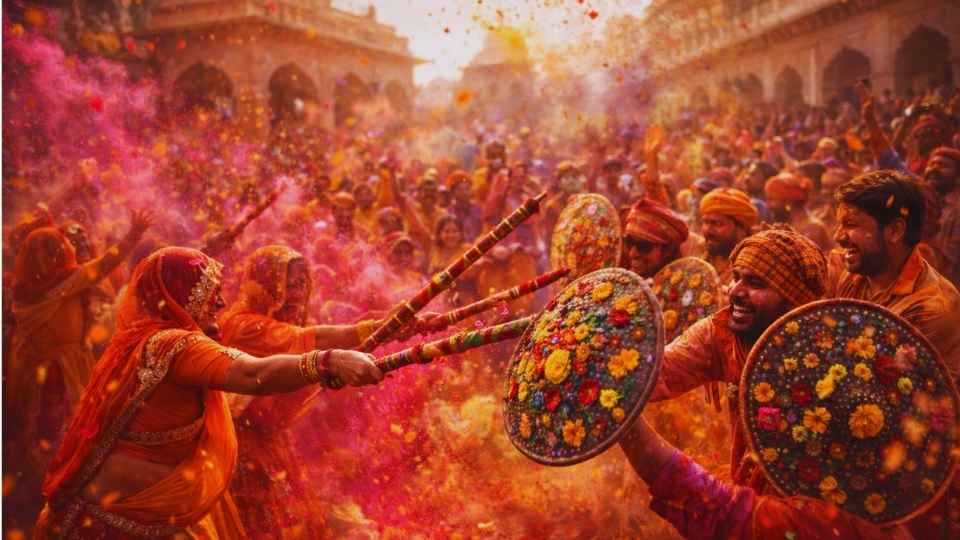
Expect singing, dhols, ceremonial laddus, flower showers, and crowded lanes filled with colour and devotion. Because the event attracts thousands, local authorities often deploy significant security arrangements; plan early and follow local guidance on where to stand and how to move through the crowds.
Why go: Lathmar is theatre and mythology merged — the kind of Holi you’ll remember for its sheer theatricality and cultural texture.
Practical tip: Book lodging in Mathura/Vrindavan well in advance, travel light, carry an ID and keep valuables safe. For photography, respect personal space and local rules — some temple precincts restrict commercial shooting.
You can read: Your Perfect Andaman Tour Plan: 7D-8N
2. Vrindavan & Mathura — Phoolon wali Holi and the devotional Holis
The wider Mathura–Vrindavan area hosts a patchwork of Holi rituals across weeks: floral Holis (phoolon wali Holi), temple processions, bhajans, and the city’s own Rangotsav. In Vrindavan, several temples (including Banke Bihari) stage floral Holi ceremonies in which devotees shower one another with petals rather than colours — it’s fragrant, photogenic, and more gentle than the street Holi.
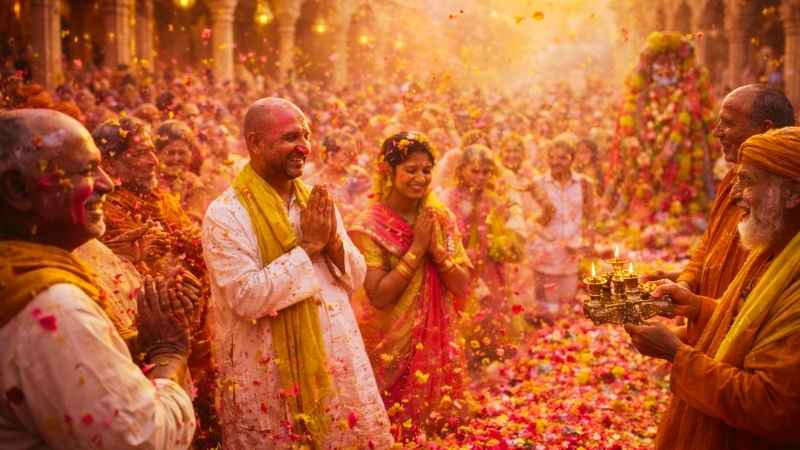
The Braj region’s Holi season can be long and multilayered, so if you want a devotional or sensory experience rather than just colour-throwing, devote 2–3 days to explore its temples and scheduled events.
Why go: For devotees and travellers who want Holi’s spiritual side — bhajans, ritual, flowers, and community.
Practical tip: Dress modestly when visiting temples, avoid intrusive photography during pujas, and check temple timings in advance.
Related: Top 15 Countries Without Army Offer Great Travel Experience
3. Shantiniketan — Basanta Utsav: Tagore’s poetic Holi
Rabindranath Tagore reinvented Holi at Shantiniketan as Basanta Utsav — a celebration of spring where music, poetry, dance, and abir (colours) are woven together in a collegiate, contemplative atmosphere. Instead of chaotic crowd-play, Basanta Utsav is staged, artistically curated, and feels more like a cultural festival.
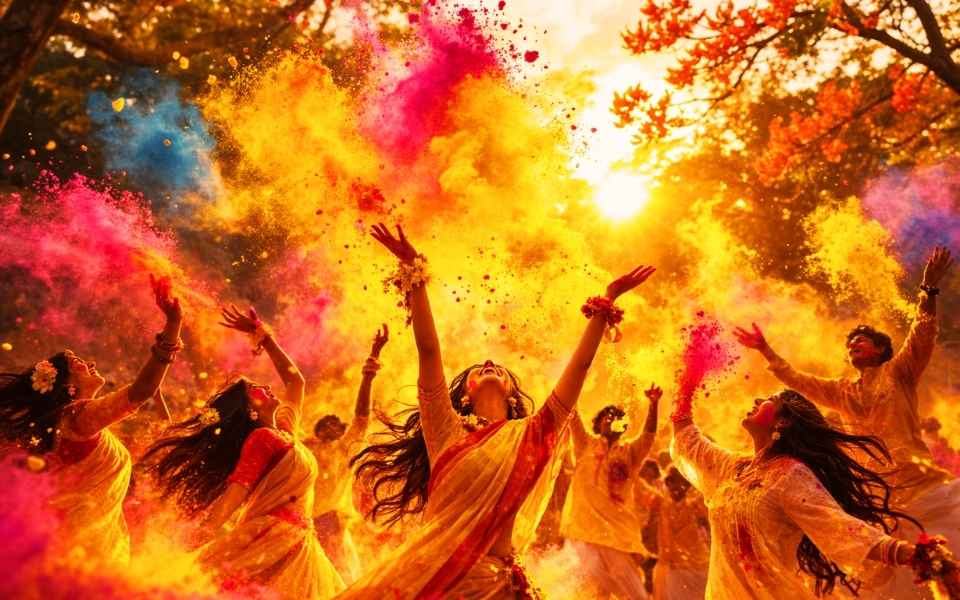
Expect student performances, Rabindra sangeet, institutional rituals, and a gracious, camera-friendly ambience that’s perfect for couples, families and photographers. If you prefer a gentler, cultivated Holi with strong cultural content, Shantiniketan is a top pick.
Why go: For an artistic, less frantic Holi rooted in Tagore’s vision.
Practical tip: Combine Basanta Utsav with a day exploring Santiniketan’s craft bazaars and local eateries. Book homestays early for the weekend.
Apart from Basanta Utsav, you can also experience Shantiniketan’s most treasured celebration, Poush Mela. Watch the video below to see its vibrant charm and cultural beauty come alive.
4. Goa (Anjuna, Baga, Arambol) — beach parties, DJs and colourful nights
If your idea of Holi includes electronic music, sunset beach parties and crowds in holiday mode, Goa is your match. Beaches like Anjuna, Baga, Vagator, and Arambol host ticketed colour parties, pool Holi events and DJ nights where sundown into night is the main show.
These are less about tradition and more about shared high-energy fun — think organic gulal, foam and rain-dance features, live DJs and an international crowd. For a safe party experience, prefer established events with organizers and security rather than unregulated gatherings.
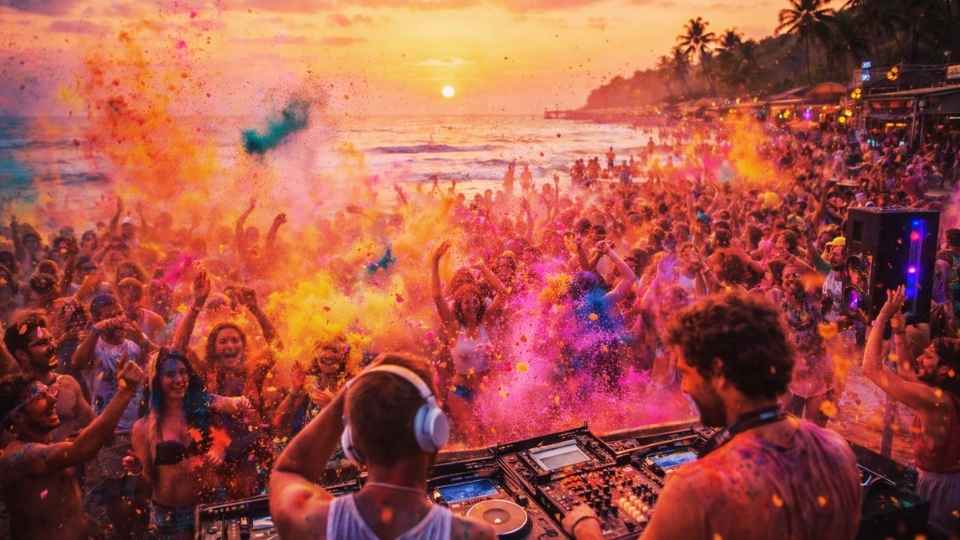
Why go: Party atmosphere, ease of travel, and a young international crowd.
Practical tip: Buy tickets from verified organizers, insist on organic colours if provided, avoid over-crowded unauthorized events, and never leave drinks unattended.
Explore More about Goa Here >>
5. Varanasi — holy ghats, ash rituals and deep tradition
Varanasi offers a Holi that can feel very different from tourist-packed beach raves or spectacles. Here you’ll find rituals such as the Masane ki Holi — a tradition linked to cremation-ground lore and Shiva worship — and vibrant ghat-based (Ganga River) celebrations, processions, and temple rites.
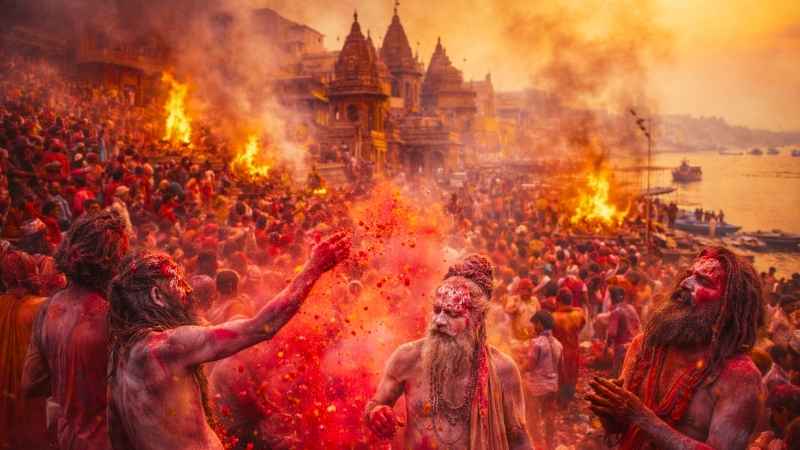
Varanasi’s Holi has sometimes been subject to restrictions (for instance, authorities may limit certain rituals to temple premises depending on the year) because of crowd, religious sensitivities, and ghat management; check local advisories before you go.
Why go: For a raw, unfiltered cultural experience and pilgrim-centred rituals.
Practical tip: Stay near a reputable hotel, celebrate Holi in daylight and in groups, and avoid narrow, unlit alleyways at night.
You can read: 6 Best Places to Visit in Ladakh (with a Detailed Itinerary)
6. Udaipur — Royal Holi and palace-backed festivities
Udaipur and other heritage cities occasionally stage palace-hosted Holi events that fuse cultural performances with comfortable logistics: think private courtyard colour ceremonies, classical music, heritage hotel packages and controlled guest lists.
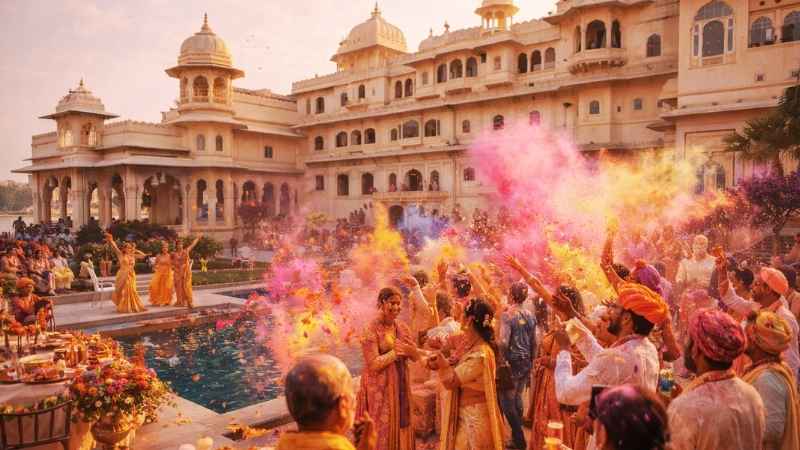
These are ideal if you want a refined Holi — safe, photogenic and less chaotic. Festival packages often include lunch, cultural shows and a curated “royal” feel.
Why go: When you want Holi with heritage charm but without the crowd scrum.
Practical tip: Book palace or heritage-hotel packages in advance and check whether colours provided are skin-safe and organic.
7. Pushkar — backpacker-friendly Holi with desert vibes
Pushkar’s Holi blends a backpacker, hippie energy with traditional Rajasthani colour-play. The town hosts open-air parties, informal music gatherings and a lively mix of foreign and domestic travellers during Holi.
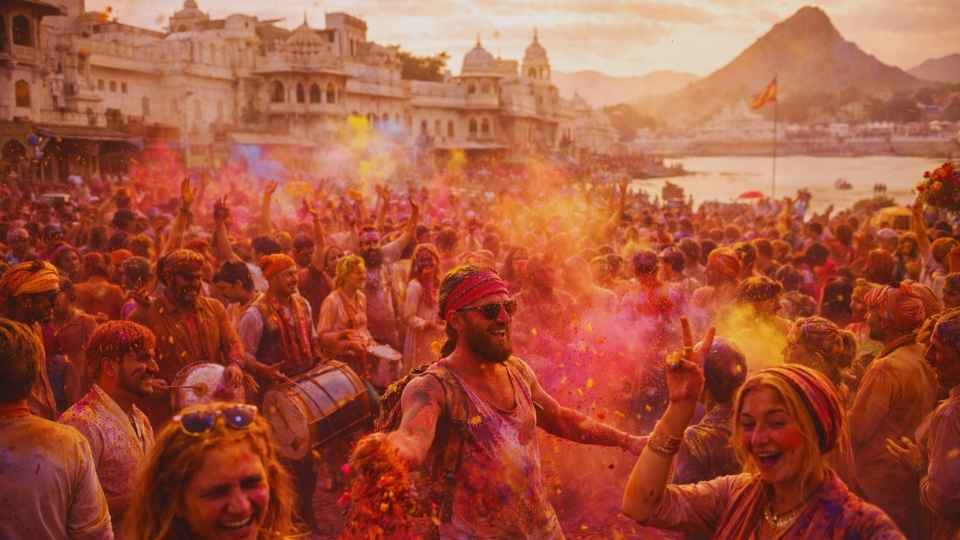
It’s fun, photo-friendly and often less commercial than Goa’s big-ticket events. If you’re combining Holi with a Rajasthan trip, Pushkar’s carnival-like scene is an appealing stop.
Why go: Easy to combine with desert itineraries, friendly crowd, lots of music and informal events.
Practical tip: Respect local customs around temples and the lake; avoid wearing expensive jewellery during street parties.
Related: Safest Cities in India for Women Travelers: Based on NARI 2025 Report
How to plan travel, accommodation, and safety
- Book early: Iconic Holi spots (Mathura–Vrindavan, Barsana, Goa) sell out fast. Secure hotels and trains at least several weeks ahead for peak events.
- Check official schedules: Many temple Holis follow temple calendars; dates and ceremonial times are announced annually. Confirm times, processions and restricted entry areas before you travel.
- Pack smart: Old clothes, sunglasses, a waterproof phone pouch, a small towel, quick-dry fabric and basic first-aid. Bring biodegradable or organic gulal if you buy colours locally.
- Protect valuables: Use a money belt or zippered pouch. Avoid carrying expensive cameras or jewellery into dense crowds.
- Health & skin care: Carry moisturizer and a gentle cleanser; if you have sensitive skin, test any colour in a small patch first. Drink water and avoid excessive alcohol, especially in crowded events.
- Respect local rules: Temple events may have dress codes or photography restrictions. In high-energy spectacles like Barsana, follow marshals and police directions.
Suggested mini-itineraries
- Braj immersive (3 days): Day 1 — Mathura temples + Holika Dahan; Day 2 — Vrindavan phoolon wali Holi & temple visits; Day 3 — Barsana Lathmar spectacle.
- Shantiniketan weekend (2 days): Day 1 — Local sightseeing + cultural evening; Day 2 — Basanta Utsav + local crafts.
- Goa party break (3 days): Day 1 — arrive, sunset beach party in Anjuna/ Arambol/ Baga; Day 2 — daytime pool Holi & DJ night; Day 3 — relax on the beach and recover.
Holi Photography ideas
- Hero shot idea: Close-up of hands tossing gulal, motion-blurred powder in mid-air, shallow depth of field.
- Destination ideas: capture devotional singing at Mathura, petal showers at Banke Bihari, stick-play in Barsana (from a safe distance), Basanta Utsav dancers at Shantiniketan, and sunset neon at a Goa Holi party.
- Ethics: Always ask permission before photographing individuals in intimate ritual moments, and credit local communities when sharing cultural imagery online.
FAQ (short, schema-ready answers)
Q: When is Holi celebrated?
A: Holi follows the Hindu lunar calendar and typically falls in February or March; Holika Dahan is the night before the main colour day. Check the current year’s calendar for exact dates.
Q: Which Holi is the most traditional?
A: The Braj region (Mathura–Vrindavan–Barsana–Nandgaon) hosts many of Holi’s most traditional, myth-rich events — including Lathmar and phoolon wali Holi.
Q: Is Holi safe for tourists?
A: Yes, with common-sense precautions: stay in groups, follow local instructions, avoid expensive items in crowds, and prefer organized events for party settings.
Q: Can tourists join temple Holi events?
A: Often yes, but some temple rituals may be restricted to devotees or have specific timings. Always check the temple’s visitor guidance and be respectful of rituals.
Q: What should I pack for Holi?
A: Old clothing, sunglasses, waterproof phone pouch, towel, moisturizer, biodegradable colours and basic first-aid.
Final thoughts
Holi is a festival that wears many faces — devotional and intimate in the temples of Vrindavan, theatrical in Barsana’s Lathmar, poetic at Shantiniketan, electric on Goa’s beaches, and solemnly ritualistic on Varanasi’s ghats. Choose the place that matches the kind of Holi you want to live: spectacle, spirituality, art or party. Whichever you pick, travel prepared, travel respectfully, and let the colours be a doorway to the local stories behind the celebration.

Ms. Subhra Das is a biology teacher in high school. Besides she is a passionate traveler, science writer, and nature lover.
As a teacher, she never restricts herself to the four walls of the classroom, rather she loves exploring the crude science behind the natural facts that include human and animal health, critical diseases, typical characteristics of wildlife, and mother nature.
Ms. Subhra Das is also a passionate traveler and explorer; she always tries to uncover natural flora and fauna at every destination she travels.




![Read more about the article Gumbadara Viewpoint: Enjoy a Breathtaking Panoramic View of Mountain Valley [& Mt. Kanchanjungha]](https://travelentice.com/wp-content/uploads/2023/06/Gumbadara-Viewpoint-300x169.jpg "Gumbadara Viewpoint: Enjoy a Breathtaking Panoramic View of Mountain Valley [& Mt. Kanchanjungha] 14")
