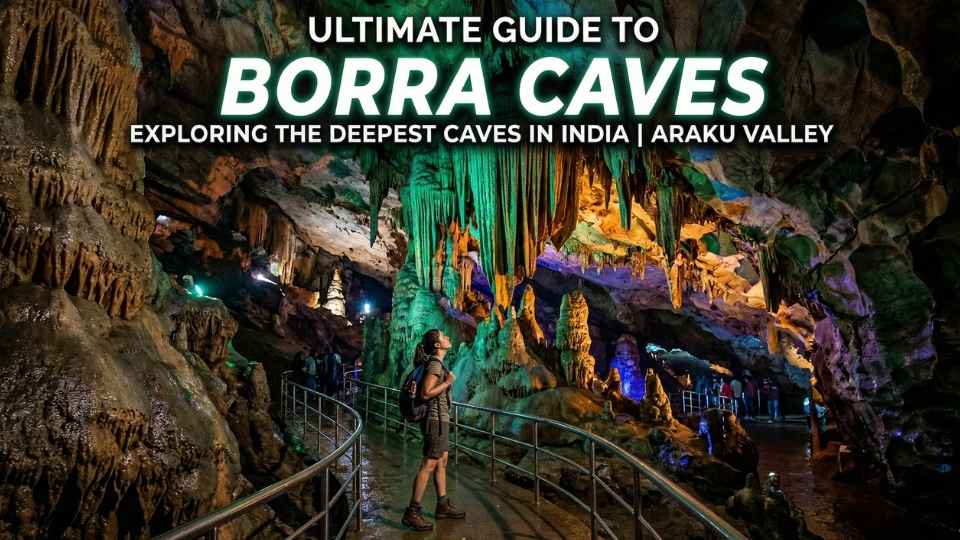
The first time I stepped into Borra Caves, I was hit with pure astonishment. It opens up like a hidden, subterranean world—a humid, echoing chamber where dramatic limestone formations meet the surreal glow of artificial lights.
However, most travelers make a classic mistake: they visit on a rushed day trip from Vizag, descend just 100 steps for a quick glimpse of stalagmites, and leave without ever seeing the cave’s true soul. If you stay near the entrance, you’re stuck in a sea of selfie-seekers and the loud echoes of shouting crowds.
The real magic of the deepest caves in India happens when you keep walking.
Table of Contents
While the entrance is often a chaotic rush of people, especially during the peak season from October to March and weekends, the atmosphere changes completely as you descend into the belly of the cave. The crowd vanishes, the voices fade, and you’re left with the true, raw spirit of the cavern.
I’ve navigated these slippery paths to bring you a guide that doesn’t just show you the entrance. Later in this article, I’ll give you a far better tour plan to help you experience the hidden side of this Araku Valley wonder, including the complete Tour Plan.
Why Borra Caves is a Must-Visit
Located in the heart of the Araku Valley, Borra Caves is not just about “seeing a cave”—it’s about experiencing nature, geology, and adventure together.
Natural beauty:
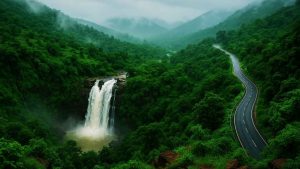
Surrounded by dense greenery and rolling hills of the Eastern Ghats, winding roads, and coffee plantations the journey itself is scenic and refreshing.
Massive Scale
One of the largest cave systems in the country, reaching depths of nearly 80 meters.
Unique cave formations:
Inside, you’ll find stunning stalactites and stalagmites formed over thousands of years—some even resemble shapes like Shiva Lingam or human figures.
A mix of adventure, history & photography:
Walking through dimly lit pathways, exploring massive chambers, and capturing dramatic rock textures makes it perfect for explorers and photographers alike.
The Legend and History
The story of Borra Caves is a fascinating blend of British discovery and ancient tribal folklore.
The Discovery: The “modern” world learned about the caves in 1807 through William King of the Geological Survey of India. However, local tribes have known and revered this place for centuries.
The Hole and the Holy Cow: The word “Borra” literally means “hole” in Odia. Legend says a cow once fell through the roof of the cave. While searching for it, villagers discovered a stone shaped like a Shiva Lingam deep inside. They believed it protected the cow, leading to the construction of the small Shiva shrine you can still see today.
The Architect: The real creator of this masterpiece is the Gosthani River. Over eons, its calcium-rich waters carved through the limestone, creating the massive hollows we walk through today.
Nature’s Art Gallery: What to See Inside Borra Caves
The interior of Borra Caves is divided into different “chambers” highlighted by vibrant, multicolored lights.
Spot the Formations: Look closely at the limestone, and you’ll see shapes that have earned famous names over the years:
- The Mother-Child: A striking formation that looks like a mother holding her infant.
- The Human Brain: A massive, intricately textured deposit.
- Lord Shiva & Parvati: The spiritual heart of the cave.
The Travel Entice Pro Tip: Go Deeper. Don’t let the crowds at the entrance discourage you. Most casual tourists stick to the first few levels due to time constraints. If you have the time and stamina to go deeper, you’ll find a few tourists scatter into different paths. This is where the magic happens—someplaces it’s quiet enough that you can even hear the rhythmic sound of waterdrops hitting the cave floor, the very process that built this place over millions of years.
Photography Tip: In these quieter, deeper sections, you’ll have more space to use “Night Mode” on your phone without someone walking into your shot. Use the colored lights to create high-contrast silhouettes!
Borra Caves: Timings, Tickets, and Visitor Basics
Before you set out, here are the nuts and bolts of planning your visit.
Timings: 10:00 AM to 5:00 PM (Daily).
Pro Tip: Some local staff take a lunch break between 1:00 PM and 2:00 PM, during which entry might slow down.
- Entry Fees:
- Adults: ₹80
- Children: ₹60
- Camera Fees: ₹25 (Phone), ₹100 (Digital/Still), ₹100 (Video).
| Detail | Information |
| Location | Ananthagiri Hills, Araku Valley, Andhra Pradesh |
| Timings | 10:00 AM to 5:00 PM (Lunch break: 1:00 PM – 2:00 PM) |
| Entry Fee | ₹80 (Adults), ₹60 (Children), ₹100 (Camera) |
| Best Time to Visit | November to February (Cooler weather) |
Best Time to Arrive: Get there exactly at 10:00 AM. You want to be the first through the gate before the tour buses from Vizag and Araku arrive around noon.
Practical Rules: Avoid carrying heavy bags as there is a lot of climbing. Plastics are strictly discouraged—let’s keep the caves clean!
Accessibility Note: Be prepared for stairs. There are over 300 steps of varying heights and steepness. It is not wheelchair accessible, and elderly travelers with knee issues may find the ascent back to the entrance quite strenuous.
Best Time to Visit Borra Caves
While the caves are a year-round attraction, your experience will vary wildly depending on when you go.
- Season-wise Advice:
- Winter (October to February): This is the peak season. The weather in the Araku Valley is spectacular—cool, crisp, and perfect for the 90km drive.
- Summer (March to June): It gets humid inside. While the cave is technically “cooler” than the outside sun, the moisture can make it feel sticky.
- Crowd Level:
- High Alert: Weekends, National Holidays, and the entire holiday block from December to January are incredibly crowded.
- The Travel Entice Secret: If you can, visit on a Tuesday or Wednesday. The difference is night and day. You’ll have the paths to yourself, and that “crowd-free” experience I mentioned earlier happens much sooner.
How to Reach Borra Caves
The journey to the caves is just as famous as the destination itself!
By Train (The Scenic Route):
Take the 58501 Visakhapatnam–Kirandul Passenger. This is widely considered one of the most beautiful train journeys in India. It passes through 58 tunnels and over dozens of bridges.
Exit at: Borra Guhalu Station. From there, the caves are just a 2km auto-rickshaw ride away.
By Road:
From Visakhapatnam: It’s about 90 km (approx. 3 hours). The road is a winding ghat road with stunning views of the Ananthagiri coffee plantations.
From Araku Valley: If you are already staying in Araku, the caves are only 36 km (about 1 hour) away.
Where Travelers Usually Start: Most travelers start from Visakhapatnam early in the morning to catch the train, then hire a private cab for the return journey to visit nearby spots like Katiki Waterfalls. If you prefer a relaxed pace, stay in Araku and make Borra Caves your first stop of the day.
What to Eat: Local Flavors Near Borra Caves
You can’t visit this region without trying the local tribal cuisine.
- The Famous Bamboo Chicken (Bongu La Kodi): This is the star of the show. Chicken marinated in local spices, stuffed into bamboo stalks, and slow-cooked over a wood fire—no oil used! You’ll find many stalls right outside the cave entrance.
- Snack Like a Local: Look for roasted corn (bhutta) and local root vegetable snacks sold by tribal women near the parking area.
- Lunch: For a proper sit-down meal, there are small APTDC-run restaurants and private dhabas nearby serving standard South Indian thalis.
Nearby Places to Visit
- Katiki Waterfalls: A few kilometers from the caves; requires a rugged 4×4 Jeep trek and a short walk.
- Ananthagiri Coffee Plantations & Wooden Bridge: Walk the “Sunkarimetta Nature Trail” over a rustic wooden bridge tucked inside the estates.
- Galikonda View Point: The highest point in the region, offering a 360-degree view of the valley.
- Chaparai Cascade: A natural stone water slide surrounded by forest—perfect for a quick dip.
- Araku Pinery: A majestic plantation of towering pine trees, ideal for peaceful walks and photography.
- Tribal & Coffee Museums: Essential stops to understand the history, culture, and famous flavors of the region.
Borra Caves & Beyond: Itinerary Ideas
Whether you’re on a quick dash or a slow mountain retreat, here is how to structure your trip based on the Travel Entice expert plans.
The Half-Day “Quick Explorer” (3–4 Hours)
- 10:00 AM: Arrive at Borra Caves (Early entry is key).
- 12:00 PM: Bamboo Chicken lunch at the cave exit.
- 1:00 PM: Quick stop at Ananthagiri Coffee Plantations for photos.
The Full-Day “Adventure Special”
- Morning: Borra Caves (2 hours) followed by a Jeep trek to Katiki Waterfalls.
- Afternoon: Visit Ananthagiri Coffee Plantations & Wooden Bridge (Sunkarimetta Nature Trail).
- Late Afternoon: Explore Araku’s Tribal Museum and Padmapuram Gardens (if time permits).
- Evening: Sunset at Galikonda View Point.
Ultimate Araku Valley Combo (1N-2D) – Travel Entice Signature
- Day 1: Start from Vizag via the Kirandul Passenger (Scenic Tunnels) or private car. Explore Borra Caves and Katiki Waterfalls. In the afternoon, cover Galikonda View Point and the Ananthagiri Coffee Plantations (Wooden Bridge). Check into your Araku hotel and spend a relaxing evening at the Coffee Museum.
- Day 2: After breakfast, visit Padmapuram Gardens, the Been To Bar Chocolate Factory, and the Tribal Museum. Post-lunch, head to Chaparai Cascade and the serene Araku Pinery before heading back to Vizag.
Note: For a detailed breakdown, check out full Araku Valley trip plan here.
The 2N-3D “Araku-Lambasingi” Grand Tour
- Day 1 & 2: Follow the 1N-2D Araku plan above.
- Day 3: Depart early for Lambasingi (the Kashmir of Andhra). Experience the morning mist, visit the Thajangi Reservoir, and explore the local strawberry farms before returning to Vizag.
Travel Entice Pro-Tips
- Wear Grip Shoes: The cave floors and waterfall rocks are notoriously slippery.
- Hydration: It stays humid inside the cave; always keep a water bottle handy.
- Timing: Reach Borra Caves by 10:00 AM sharp to beat the heavy tourist influx that starts at noon.
- Accessibility: With over 300 steps, the cave is a challenge for elderly travelers; take it slow and use the benches inside.
Sample Budget
Planning your finances? Here is a breakdown for a comfortable trip.
| Expense Item | 1-Day Trip (Per Person) | 1N-2D Trip (Per Person) |
| Train (Vizag-Borra) | ₹150 – ₹600 | Included in travel |
| Private Car Rent (Vizag-Araku-Vizag) | ₹3,000 – ₹4,000 | ₹7,000 – ₹8,000 |
| Hotel/Stay | N/A | ₹1,500 – ₹3,500 |
| Food (All Meals) | ₹400 – ₹600 | ₹1,200 – ₹1,800 |
| Entry & Jeep Fees | ₹500 – ₹800 | ₹800 – ₹1,200 |
| Approx Total | ₹1,500 – ₹2,500 + Car | ₹4,500 – ₹7,500 + Car |
Note: For a detailed breakdown, check out my full Araku Valley trip plan here.
FAQs
How much time is needed for Borra Caves?
Generally, 2 to 3 hours is enough. However, if you are a photography enthusiast or want to explore the deeper sections where the crowds thin out, keep at least 4 hours aside.
Is Borra Caves suitable for family travel?
Yes, it is a fantastic educational experience for kids. However, due to the 300+ steep and sometimes slippery stairs, it may be challenging for senior citizens with mobility or knee issues.
What is the best month to visit Borra Caves?
The peak season is November to February when the weather in Araku is cool and pleasant. Avoid the height of the monsoon (July-August) as the paths can become very slippery.
Can Borra Caves be covered with Araku Valley in one trip?
Absolutely! Most travelers use Borra Caves as their entry point to the Araku Valley. They are perfectly situated to be part of a 1-day or 2-day Araku circuit.
Is photography allowed inside Borra Caves?
Yes, photography is allowed! There is a small fee for mobile cameras (₹25) and a higher fee for digital/still cameras (₹100). The artificial lighting inside makes for some incredible, sci-fi-like shots.
Final Remarks
Borra Caves is not just a destination—it’s an experience that stays with you. From the moment you step inside to the deeper, quieter sections where only the sound of water droplets echoes, it offers something truly different from typical tourist spots.
But the real magic happens when you don’t treat it as a standalone visit.
If you’re planning smartly, combine Borra Caves with a complete Vizag to Araku Valley trip. The scenic train journey through tunnels, the winding hill roads, coffee plantations, viewpoints, and tribal culture—everything together creates one of the most memorable travel experiences in South India.
Here’s what I personally recommend:
- Start from Visakhapatnam (Vizag)
- Cover Borra Caves on the way to Araku
- Explore Araku Valley, coffee plantations, and viewpoints
- Stay overnight if possible to enjoy the calm vibe
This way, Borra Caves becomes more than just a cave visit—it becomes part of a complete, well-rounded travel story.
If you are someone who loves nature, unique places, and slightly offbeat experiences, then this trip deserves a spot on your list.
Plan your Vizag-Araku Trip including Borra Caves, with Travel Entice Tour Plan for the best travel experience. I’ve done the legwork so you can focus on the memories. Happy traveling!

![Read more about the article Anjuna Beach in Goa: Is it worth visiting? [Full Details]](https://travelentice.com/wp-content/uploads/2022/12/Anjuna-Beach-in-Goa-300x169.jpg "Anjuna Beach in Goa: Is it worth visiting? [Full Details] 3")